Monday, February 22, 2021

Cell 4 – Letter to the seven churches (part 1)

 Text: Revelation 1


Icebreaker: What comes to mind when you hear that we will have a message or cell about Revelation? (or) What would be your reaction if God showed up to speak to you?


Introduction: The book of Revelation is taboo for many people, and because of that it is misunderstood and many Christians just don’t read it. With the help of the Holy Spirit, and an understanding of the background to its writing, we can see how it made sense to those who first read it, and can discover how what God spoke to them then still has relevance to us and to our every-day lives with Christ now. 


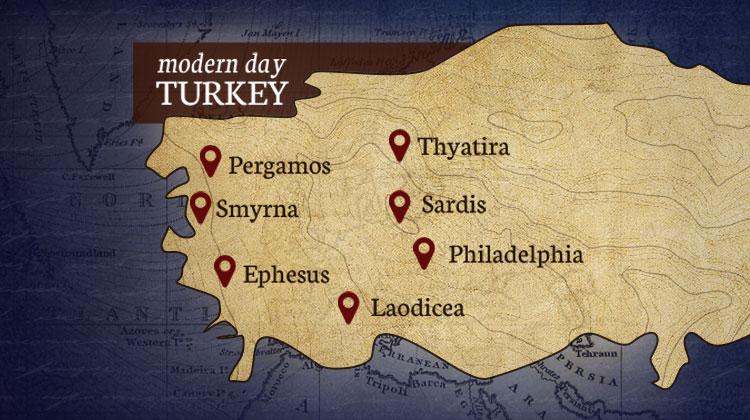
Today we start our series about the seven churches of Revelation. These churches were located in Asia-Minor, which is now part of modern-day Turkey. So that we are prepared to jump into hearing about the seven churches themselves,  we first need to understand what was happening with John, the Apostle who “wrote” the letters to them, by recording what Jesus gave him to share. Knowing that although John wrote the words, it was Jesus who inspired and gave them, is a valuable lesson to us all about how we come to have the scriptures. 


  1. John was in exile when he received the Revelation

The Apostle John was exiled on the island of Patmos, (near the coast of Asia Minor/Turkey)  which in his time was a Roman penal colony. John’s “crime” was to proclaim the gospel; the Roman Emperor was mercilessly persecuting Christians with the aim of destroying Christianity.  So, we know that John was in a prison when Jesus spoke to him and gave him the Revelation. 


This is a good reminder for us that God can speak to us whatever “prison” we find ourselves in and that even in the hardest circumstances, God can deliver His message to us and through us. It’s worth noticing that this message was not a message that would particularly comfort John in his distress;  this message was for others, and John was the one to receive it and to make sure that it was written down and passed on to God’s people. This message was very important and John’s circumstances were not a barrier to him being used by God to receive and share it. 


  1. God gave words to the seven churches that would spread into the world.

These particular seven churches may have been chosen to receive Christ’s apocalyptic message because, geographically, they were located along an established circular trade route, which brought together the most populous and influential parts of the province. Once the apocalyptic message was given to the churches in these prominent cities, the message would spread to the Christian communities in the rest of the province through those who would visit for trade or through those who would journey to other places for trading.  It seems that God had a strategy in speaking to these seven churches which would help the growth of Christianity around the world. 


The seven lampstands that we read about represent the seven churches and we hear how Jesus, who was “One like the Son of Man” (v13), was moving amongst them in John’s vision.  Jesus came as the ‘Light of the world’ and commissioned us to be the light of the world. We are not the light itself, but we reflect the Light of Jesus into the world.


We can ask ourselves are we open and attentive to the Spirit in a way that means God can use us to receive from Him, not necessarily for the benefit of ourselves, but for the benefit of others, as John was here?


  1. We cannot stop! 

Today nothing remains of the churches that were named in the Revelation given to John. Persecution has been an ongoing threat to Christianity in Asia Minor, particularly since Constantinople fell to the Ottomans in 1453. Estimates place the current number of Christians as being about two percent of Turkey’s population. God’s strategic use of churches to share the gospel message continues today, particularly in places where there is severe persecution of Christians, but wherever we may be living, as the church we are called by Jesus to “make disciples” that His glory might be known. 


This is a privilege and a responsibility that we cannot ignore - now we are carrying the message and speaking of the power of Jesus to save in this time and place as the seven churches of the Revelation were called to do in their time. 


Conclusion:

Although the seven letters in Revelation are tailored to the named churches, these churches and their stated deficiencies can symbolize all churches and Christians in one respect or another and so the instruction given to Revelation’s congregations, is a valuable source of God’s word to Christians and churches today.

Localities of the 7 churches:A map of modern day Turkey with seven Churches marked on map


Cell 3 – Where is our hope?

 Text: Proverbs 3.5-6 “Trust in the Lord with all your heart and lean not on your own understanding; in all your ways submit to him, and he will make your paths straight”.


Icebreaker:  Every day we make many decisions. What kind of decision-maker are you? Do you decide quickly? Do you find it difficult to make decisions? Do you sometimes find it hard to know what the right decision is?


Introduction:

Often when we make decisions, we are relying on our own understanding. The difficulty with this is that human understanding is always subject to error. What appears to be the right choice may be the wrong choice. What appears to be solid and a source of hope may be revealed instead, to be a source of deceit. The Lord sees the bigger picture and He always knows what’s best for us. The point here is that we need to recognize our own limitations. Many times we desperately seek for hope, but in the wrong places. Today, the big question is, ‘Where are you seeking for hope?’ 


  1. What does it really mean to trust and have hope in God’s way?

Trusting in God means that we are leaning away from our own understanding and towards God’s by acknowledging and following His path. It means actively pursuing God’s will for your life and doing things God’s way instead of your way (if your way is different). It is being teachable and being willing to say to God “OK, I don’t understand, but I know You do so I’m going to go Your way.” It is living with active confidence in the truth that God always does what is best even when it doesn’t seem so to you.


Hope (Hope in the original Greek is the word Elpis = ἐλπίς) can be defined in two ways:

  1. Joyful and confident expectation of eternal salvation (Strong’s Concordance)

  2. An expectation that God will intervene. (Bible dictionary Vida Nova).


So we have trust and hope, in the way God commands, when our joy, expectation, vision, obedience and life reflect Him and His will for us.


  1. What if people had the same hope and expectation in God, that they have in the COVID vaccine?

I see a world mobilizing, planning and blindly relying on the function of a vaccine that is the hope of millions of people. But what if we had the same hope that God is real and has real impact in our lives? How different would the world and our lives be? Of course we pray that the vaccine will help the situation, but it is not where we should be placing our hope, only God can give us hope of a better future.  


  1. To have Godly HOPE is to never forget the truth about who we are.

We cannot forget who we are, the truth and purpose of our lives. If we do, we might end up living like we will never die and dying like we never lived.

You were made for so much more than this. So much more than earthly life. Everything begins on this side of eternity, but we shouldn’t be so focused on this life, and today, that we forget that there is a life to come, beyond this one. 


Conclusion: 

The following poem was written by an American soldier that gave his life to Jesus one day before he died in the war. Listen and reflect on it. 


"Lord God I have never spoken to you


But now I want to say, "How do you do?"

You see, God, they told me You didn't exist

And like a fool I believed all this.

Last night from a shell hole I saw your sky

I figured right then they had told me a lie

Had I taken time to see the things you made

I'd have known they weren't calling a spade a spade.


I wonder, God, if you'll take my hand

Somehow I feel that you'll understand

Funny I had to come to this hellish place

Before I had time to see Your face

Well, I guess there isn't much more to say

But I'm sure glad, God, I met you today

I guess zero hour will soon be here

But I'm not afraid since I know

 you're near


The signal!


Well, God, I'll have to go

I like You lots, I want you to know

Look now this will be a horrible fight

Who knows, I may come to Your house tonight

Though I wasn't friendly to You before

I wonder, God, if You'd wait at Your door


Look, I'm crying, I'm shedding tears


I'll have to go now God goodbye

Strange now, since I met You, I'm not afraid to die"


Cell 2 – When God does the impossible

 Text: Matthew 17.20 “He replied, "Because you have so little faith. Truly I tell you, if you have faith as small as a mustard seed, you can say to this mountain, 'Move from here to there,' and it will move. Nothing will be impossible for you."


Icebreaker:

What words do you use to describe the challenges that you face in life? Maybe you call them giants, hills to climb or mountains to be moved? The good news that we’ll hear today is that Jesus will help us to face and overcome those challenges because in Him, even our little faith becomes a powerful force. 


Introduction

One of the greatest challenges Jesus continually gave his followers was to have faith. He knew that having faith held the power to make amazing things happen. Peter had a little faith and walked on water (Matthew 14:29). A woman who suffered from bleeding had a little faith and was healed after 12 years without hope (Matt 9:20-22). A little bit of faith enabled the blind to see (Mark 10:46-52) and brought the dead back to life (Hebrews 11:35).  


How can we tell when there’s an absence of faith in our life? We stop believing that the impossible is possible with God, and we settle for living a ‘small’ life,  confined by our feelings and by what we can see around us.


If today, we want to go deeper in our relationship with the God of all things impossible, it is necessary that we take the following 5 steps: 


  1. Acknowledge your mountains

If we are going to let God move these mountains, we need to acknowledge that they exist. We can’t pretend that the mountain that is dominating our life is not real, or that it does not produce feelings in us– we need to name it and acknowledge it for any kind of emotional healing or journey of peace and health in Jesus to begin. God wants us to be honest with Him about our mountains. 


The thing I’ve been learning is that the mountains I need to move in my life aren’t necessarily the circumstances I see in front of me. My biggest mountains are usually inside me: fears in relationships, doubts about whether I can change, disappointing moments when I tried to have faith but still suffered defeats in my life that didn’t only impact me but also had an impact on friends and family around me.

If I am going to let God move these mountains, the first step I need to take is to acknowledge that they exist.

  1. Deal with denial

Do you believe that the mountain can be moved? Don’t deny it if you don’t – but run to God instead. Remember the story of the man who came to Jesus to ask for healing for his son (Mark 9:24). In one moment he confesses his faith that his son can be healed, but he also realises that his faith is small and says “Help me with my unbelief”. This is the amazing love of Jesus,  that allows us to be honest so that we can say to Him “I believe, help me with my unbelief”. We have to remember that it doesn’t help to ignore or to try to hide something or to pretend that it isn’t there – denying reality keeps us trapped. 


  1. Don’t be afraid of the difficult facts

In the Old Testament Abraham received a word that He would have a son, but when he heard that, he wasn’t able to think beyond the fact that he was really old to have one and so was his wife. Frankly he thought that it might be impossible, but even with that thought he expressed His faith in God. At the right time, God kept the promise and showed Abraham, and all of us who read his story,  that by God’s word the impossible will happen. Don’t put facts before faith, God can do what He plans and desires, no matter what the facts of a situation are. 


  1. Ask God for help

We are becoming a generation that murmur and complain to God, to our friends and on-line, but who rarely ask for help. Do you know that there is a difference between the two? Complaining and asking for help are two very different things. When we complain we are simply rehearsing the problem over and over again. When we ask for help we are recognising that something needs to happen to change the situation. 

Are you committed to your prayer list? Let’s pray and seek until we hear His voice in every situation!!!


  1. Decide to walk by faith and in obedience instead of by feelings.

Feelings are a roller coaster and our hearts are deceitful, so we shouldn’t walk based in what we feel, but in what the word of God says to us. We should be a people who walk in accordance with His word. When we do that, miracles happen according to His will and purpose. Sometimes we might not be able to feel anything or sometimes we can be overwhelmed by a complicated combination of feelings and that’s why it’s so important that we walk by what we know in Jesus because He will always tell us the truth.  


Conclusion:  Today is a new opportunity to seek God as never before! Would you like to go an extra step in His direction today? Let’s surrender everything to God and pursue Him. It might seem difficult today to even have a tiny bit of faith, but God can change that if we are honest – He is able to do the impossible. He is able to transform us, transform our situation and he can fill the emptiness that is in us with the peace and joy that can only come from knowing Jesus. 


Monday, January 25, 2021

Connect Group 1: Fire (2021)

Text: Leviticus 6. 8-13 and Romans 12.2 


Icebreaker: If you want to make a fire, what will you need? What does a fire need to keep burning?


When I arrived in Guernsey in 2011, some things were very different for me, but in the house where our family went to live, the wood burner was the most unusual and amazing discovery. Our neighbour was an expert in keeping the fire burning, and one phrase was key in what he told us about how to have a fire that was good, warm and successful: “Luiz keep putting more wood on the fire, renew the logs Luiz”, this is what he used to say. Two key things for us today are that we also need to use fresh fuel in our lives and we need to allow God to renew our minds. We can’t allow that spiritual fire to go out, so, if we want to keep the fire of God burning brightly inside of us, we must understand a few things:


1)An action and a willing attitude is required to start a fire

The first law of Newton in Physics is that “an object in rest will stay in rest unless an unbalanced force acts upon it”. This is also true in our spiritual life, everything will stay the same, unless we make a start, and begin to act in a way that changes the forces that are at work within us. Something that is very common in the world today is that we keep doing the same thing and expecting different results from that action, but if we want the fire of God to burn within us, we cannot just keep being as we are now and expect something different to happen. We are responsible to start the fire, RECOGNITION is just the first step to making IGNITION possible!


2) You must keep burning! Put fresh wood on the fire every day! Renew your mind!

God gave an order to Moses -  every morning,  to keep the fire burning,  fresh wood must be put on the altar. It’s the same in our lives.


Recently I read a story about a woman called Martha, who was one of the first people to get electricity in their home in Ireland. The story said that Martha had wanted electricity for a few years and so, when it became available, she paid a lot of money to have it installed quickly, in order to be one of the first people to have it in her village. In the past she had complained that often she was left in darkness because by the time she realised that she needed a candle, it was already dark and it was very hard to find anything in an old stone house that only had a few small windows. So, the company installed the electricity, and her house became an attraction in her village.

Three months later, the electricity company sent an Engineer and the Customer Service Director to talk to Martha to check if there was a problem with the electricity at the house, because she had used so little energy that they could not even charge her for it.


However when they got there the surprise was even bigger! When they asked what and where the problem was, she said that there wasn’t one, saying instead that the electricity was great and that she loved it! Confused, they asked why she wasn’t using it if was so good, and her reply left everybody amazed. She said: “When I don’t realise that dusk is coming and miss the light completely I can turn on the lights and find my match and candle very fast, then I can light it up in a secure and quick way and then I can turn the lights down for the rest of the night”.


This story reminds us that sometimes, like Martha, we want “new things” and we are prepared to pay the price, or verbally commit to doing things differently in order to respond to the present world. But, when it happens and the ‘new’ arrives, we prefer to stay the same, remaining in our ‘comfort zone’ instead of experiencing the renewal that would lead us to finding new ways to live. God will send the fire, but if there is no RENEWAL on His terms, and in His way, the fire will die down and then go out.


To keep our  passion for God burning, and to keep the closeness of God that moves us, we need to put fresh spiritual wood on the fire every day! This wood will be our prayers, our reading of scripture, our worship, and our time with Him and around Him. We need to keep refueling the fire in this way every day.


The Bible tells us that Moses was instructed to make sure that new wood was added every day to the fire on the altar. This wood must be fresh wood, because old wood would dampen down the fire. It is the same for us - stale religiosity cannot keep the fire that is inside of us burning, so we must put fresh things in front of the Lord! Don’t offer the old (even yourself), but make a new offer of everything that you are and have, to God each day, just as His mercies to you are fresh and new every morning! In this way, you will become living sacrifices, living life in all its fullness for God’s glory!


3) Fire from yesterday was good for yesterday, but today you need to refuel the fire. 

A mistake that the people of God often make, is to think that the fire of yesterday will keep them warm and keep burning today! That’s impossible; it’s like saying that because you ate yesterday, you don’t need to eat today! Whilst it is good to recall what God has done in our lives, and good to give that testimony, it is also possible to spend too much time looking back and not enough in the present, to see what God is revealing and doing today. 

In the reading from Leviticus the priest must clean the ashes out every day. Relying too much on what is past, is to leave the ashes in the grate, and ashes cannot become a fire. Clean the ashes out today and refuel the fire of God that burns within you. 


Your time, experience, gifts, works and everything that you offered to God yesterday was good for yesterday, today is a new day with Him, and so there is a new opportunity to offer yourself to God and to allow God to be glorified through you! 


Today is a time to gather fresh wood,  so that the fire of God does not go out in our life.


Conclusion: 

I don’t know how your life is today, maybe the fire of the Holy Spirit needs refuelling in your life, or maybe the fire needs to be rekindled! The only thing that I know is that if you feel full of ashes, God brought you here today because He wants to change that situation and put a new fire inside of you! Today is time to be in a loving relationship with God again! Is a new time in our lives, do you want that? Let’s pray


Saturday, December 19, 2020

Cell 35 – Mary understood, do you?

 Text: John 2.5


Icebreaker: How do you feel when someone listens to your advice and as consequence has a good outcome?

Imagine an amazing wedding party, with many people invited and a Brazilian barbecue for everyone! Now imagine that the couple invited everyone for 3 days of partying, and the best part is that they will provide food and accommodation for all the guests!

Now imagine that in the middle of that wedding party they discover that they have run out of food and that there is no more meat for the barbecue. How do you think they would feel?

In the story that we read today, we can see a similar pattern, but this story does not end with shame and regret, but rather with joy and with the revelation that Jesus can transform everything in our lives. Mary, the earthly mother of Jesus, knew that He could transform the shame of something that was lacking, into something that would surprise everyone. She had 3 attitudes that put Jesus at the centre of that wedding, and as consequence of that, a great miracle happened. If we want to see the same thing happening in our lives, we need to understand that:


1) In Jesus we will find all that we need  

When Mary told Jesus that they didn’t have wine, Jesus said that wasn’t His time yet, but Mary understood the amazing principle that “NO ONE WILL EVER LEAVE JESUS’ PRESENCE WITH A NEED!” Even when Jesus said that it wasn’t His time, she didn’t give up, because she knew that just one word from Jesus would be enough to change that wedding celebration forever. Today the same Jesus is powerfully and lovingly PRESENT with us. Remember that no one ever left His presence with a need! Would you like to have more of Him? Invite Jesus to the area of your life where you know you need Him most in this moment – what is it that you need His power and love to act on?


2) ‘Do whatever He tells you’

Mary understood this great principle! ‘Do whatever He tells you’ goes beyond just a simple instruction. Mary had a radical trust in Jesus, and she knew that He was good and powerful, and that He would always do what was best for her. My question to you is: Are you doing whatever He tells you? Are you obeying His direction in your life? Because if you do, you will have an amazing life!!! Jesus turned the ordinary water into extraordinary wine - what is ordinary in your life that could become extraordinary through the power of Jesus? Remember that Jesus will never force us, He is gentle and loving! He asks, but if we don’t want to say ‘yes’, He will respect our decision.  Today decide to do whatever He tells you!


3) She allowed Jesus to do everything! (She was quiet, stepped back, and let him work.)

Mary trusted in Jesus, and she brought the situation to His attention, but then stepped back to allow Jesus to work in His own ways and on His own terms; after that she allowed Him to receive all the glory and honour. Many times we seek God or we do something, but we never really allow God to be the Lord, and the one who is in control of our lives. Many of us (if not all of us) are always trying to help Jesus to do what He wants, and sometimes we want some of the recognition for the great action of God in people’s lives. What about you? Who drives your life? Who receives all the glory? Would you like to know more about how to let Jesus drive your life, so that He will be the motive for everything you do, and so that you can give Him all the glory?


Conclusion: 

Mary was a great woman, and the most amazing fact about her is that she understood that Jesus is the Lord, and He can change everything that is not right in our lives. Jesus wants to transform the water in wine! Will you allow him? Let’s pray.


Saturday, December 12, 2020

Connect Group 34 - Our life – our mission

 Icebreaker: Could you introduce yourself in 10 seconds? (Take a clock a let’s go).

Text: Luke 1:26-38

Introduction: 

During the Second World War, Queen Elizabeth (who was then a princess) said: “I am a princess, this is not what I do, but who I am. There is no holiday or time off, I am a princess because of the people and for the people”. What a powerful statement to make! It’s so nice to hear, especially when it comes from a princess who would one day be Queen. It shows that beyond her title, beyond the situation she was facing, and despite the social pressure of that time, she was someone who was coherent and who understood who she really was. Princess Elizabeth served in WWII, and was trained in London as a mechanic and military truck driver at a time when other heads of state in Europe fled to places of safety.

People who’ve left an impact on the world understood that they were in the world, but understood too that they were not part of the world. They were Christians and that was, and is, enough. They weren’t Christians only on Sundays or religious holidays, but lived out their faith in their character and their identity – living as sons and daughters of God.

We need to stop with this plague of separating our lives into compartments where we say  ‘Now I am Christian’, then ‘Now I am lay person’ then ‘Now I am only a student’, or ‘Now I am working.’ You are one person under God’s guidance, and that’s it. So be it.

If we read the text of Luke again, we will be able to see that Mary said ‘YES’ to God’s plans, but she didn’t say it because everything was perfect and it would be a dream come true for this to happen to her, but rather, because as God’s child she understood that God’s plans are always what’s best for us.

Let’s see what she went through, so that we can learn how we can react, in God’s way, when we face the future that is ahead of us:


1) She didn’t say YES because it would be easy.

Look at what the text says about her first reaction to the angel

- Troubled (with what the angel was saying – she was trying to discern).

- Do not be afraid (the angel said) - probably she was afraid or else the angel wouldn’t have said it.

- By the way, you are pregnant, and you will name the baby  ‘Jesus’ (the angel said).


Mary said, ‘Yes’, despite knowing that:

- according to the law, young women who were legally engaged but found to be pregnant by someone other than their betrothed were to be stoned to death. (See Deuteronomy 22.23-24) 

- She said ‘YES’ despite knowing that many women died in childbirth. 

- She said, ‘YES’, despite knowing that it would mean the end of the dreams she had for her wedding day,  

- She said ‘YES’, despite knowing that it would probably lead to Joseph calling off the marriage. 

- She said, ‘YES’, despite knowing that she might become an unmarried mother.

-

She was young and unprepared but still said ‘YES’ because she understood that God’s plans would always better than her plans; God’s will may never be the easiest way but His will is always the best way. 


2) Sometimes God’s plans and direction seem impossible

Look at what the Angel said to Mary: ‘Your son will reign forever, and your cousin Elizabeth, who is old and has never been able to conceive, is indeed pregnant.

God calls us to accept His will, even if seems impossible, but He will always send glimpses of miracles to transform what seems impossible into possibilities. So, keep your eyes open to see and dream with what God is doing in you and around you. 

Remember the boy with 5 loaves and 2 fishes in the Bible story of John 6.9? He gave what he had to do what seemed impossible, which was to feed 5,000 people. But in that moment of decision and giving, was the seed of a great miracle.

Remember that for God nothing is impossible. Remember what he already did in your life and in the lives of those around you and let that influence your thinking and expectancy of what God can do. 


3) God wants to reach all the families of the earth through you. 

I know that might not sound real, but it’s true. 

Evan Roberts led the Welsh Revival. He started when he was 17 years old, and at the height of the outreach of the movement he was 24 years old. The Welsh Revival won, and deeply influenced, millions of people around the world.

The Welsh Revival is important for many reasons, but I love three of them:

1. It was the first great revival that was documented on TV and in the newspapers. 

2. For the first time women had a distinctive and main role in a church movement. 

3. The revival reached millions, and was the catalyst that started many other revivals. 

Today God is asking us not to focus on the difficulties, or on what we don’t yet have, but to look at Him. He doesn’t ignore our difficulties and problems but He wants to move us beyond them so that He can use us.

Everyone has a mission that God has planned for their life, don’t despise a small beginning because nothing is small with God – are you willing to say ‘YES’ in obedience, even if you can’t see too far ahead and you have questions about what God will do? Let’s ask God to do His work in us and through us today! Would you like that?


Conclusion: God is looking for men and women who are open to Him and to what He wants to do through them. Are you one of them? Would you like to be used in a powerful way and see things that not many people do? So be prepared to do things that no one else does as well! Let’s pray!


Wednesday, November 25, 2020

Connect Group 33 – Lord teach us how to pray

Icebreaker:  Think about a conversation that you have had recently with someone who you are close to – it could be a friend or a member of your family. What kind of conversation was it? Were you relaxed or frustrated when it was taking place? Did you do most of the listening or most of the talking? How did it leave you feeling afterwards?


Introduction: All of those questions that I’ve just asked you could have been questions that I asked of how it was last time you prayed. Prayer is an on-going conversation with God, where we talk and listen;  where, depending on what we are praying about, we can be very agitated or very calm, and can indeed move through a range of thoughts and emotions. Prayer always leaves us with something too - this can be anything between a deep sense of calm and peace, to a deep sense of not having understood what God wanted to say to us in that moment. It is a vital and essential part of our relationship with God, and yet many of us struggle with it and have times where we may feel that our prayers are unheard or unanswered. 


There seems little doubt that this is why Jesus taught so much about the prayer that was at the heart of His relationship with His Father. The disciples saw the aliveness of His prayer-life, and even asked that they be taught to pray as He did, because they could see how important it was to Him. Here is what Jesus said to them in reply to their question:

Text: Luke 11: 1-10

The spiritual discipline of prayer is a life-time journey for us, and because of that, it takes commitment and determination, it takes passion and a desire to be in sync with God’s will and his desire for our lives – things that are rooted in the gift of the Holy Spirit. There is so much that we could say about prayer but there are 3 things that we can see in Jesus’ teaching here:


1. Prayer has many faces and we need all of them

The first part of today’s text contains words that may be very familiar to us, even if we didn’t grow up believing in Jesus and in fact if we grew up in the church they may have been a form of words that we said every week as part of worship, (although I am not certain that Jesus ever really intended that they would be used in that way.) What Jesus is teaching here is that prayer does not have one face, but many faces and His teaching  gives us a helpful signal about what they are. He begins with praise, with giving the Father His rightful place in our lives as Lord and Master. He continues with a prayer for daily needs to be met by God, which is followed by prayer focused on the two sides of forgiveness– a prayer that comes from our understanding that we have much to confess and to be forgiven for; also that this understanding should be actively at work in our relationships with others. Finally there is a prayer for help in our struggles.


When I look honestly at my prayer-life, I know that too often I skip straight to the help bit, or even to praying for the struggles of other people, without making very much time for anything else. Is that true for you too? Does there need to be more of a balance of focusing on how awesome God is, and worshipping Him in prayer more deeply when you pray?

"Our prayers may be awkward. Our attempts may be feeble. But since the power of prayer is in the one who hears it and not in the one who says it, our prayers do make a difference." - Max Lucado

2. God calls us to persevere and to be bold in prayer

I love the image that comes in the illustration that Jesus gives here, of the man banging on the door of his neighbour and asking for blessing, even though it isn’t a convenient time! Sometimes people wrongly get the picture from this part of the text that we are like annoying kids saying to God “Dad, Dad, Dad, can I have….. please can I have…. Go on Dad, let me have…..” over and over again until God, like a harassed Dad, gets fed up of us asking and lets us have whatever we want, for a quiet life. But this isn’t what it means. 


To understand what it does mean, we have to start from the place where we should always start – with God. He loves us, he knows that we are living in a broken world, He knows that we have troubles and struggles and concerns and He wants us to rely on His love in a way that makes us unafraid to pray about those things. He wants us to keep praying with a perseverance that comes from our confidence in His goodness, rather than from our desire to have our own way. At the beginning of Chapter 18 of Luke’s Gospel,  Jesus taught His disciples that they should pray and never give up – this is the perseverance in prayer that we are working towards as we learn to pray. 


The Bible also tells us that the Holy Spirit within us helps us to pray even when we can’t find the words, and that Jesus intercedes for us, bringing His concerns for us to the Father and acting as the ultimate Advocate for those who believe in Him. Those two truths, mean that we can have confidence and boldness to do what is really unimaginable when we stop to think about it  – which is to come right close to God and tell Him what is in our heart and our minds. Even more amazing is that God knows us so well that he knows what our hearts and minds are full of – and yet He wants us to come, because He knows that our relationship with Him will grow in the way He longs for,  when we are talking and listening to Him. 


3. Is there such a thing as unanswered prayer?


In the final part of the text Jesus talks of asking and receiving, seeking and finding and knocking on doors that will open. This too can be easily misunderstood;  this does not mean that we have a ‘genie of the lamp’ God, who will grant all our desires and wishes, or who is at our command. 


How many times in your life have you prayed and prayed for something to happen or not happen and it seems that the prayer has not been answered? This happened recently to someone close to me. A Christian friend of theirs is suffering from an aggressive form of cancer – for over 12 months there has been persistent and bold prayer for healing , until this week, the person sent a message to say that their life is coming to an end. At every turn, when we prayed for things to change or get better, or for them not be as bad as we feared, things didn’t get better.  At these moments, it seemed that our prayers had gone unanswered, but actually that isn’t true. God has answered, He has made it clear that although our hearts were set on this person being healed, in some kind of temporary way in this life (because we know the path that we all have to take one day) , that their time here is coming to an end, and although that is desperately sad for their family and friends, this person will soon know total healing, beyond anything that is possible in this life.


Is it easy to take that? No it isn’t! Our desire was for healing in this life – but the truth is that human death is the reality of living in this broken world, and a life that goes on beyond that moment is the reality of living beyond this life. God had answered our prayers for healing, before we even asked them, by sending Jesus to conquer death. The prayer for healing in human terms has been met with the truth that God knows best, and that He is in control even though it isn’t what those of us who were praying for this person wanted. 


When we see Jesus in the Garden of Gethsemane, His prayer is so fervent and so passionate – He says to His Father, if I don’t have to go through this horror, please let is pass me by, but what He says next is the key to our prayer-life growing and maturing – He tells God that He will obey His will, even if it means that He has to pass through this suffering that He would rather not face. When we pray, we need to grow in our acceptance that sometimes the deepest prayers of our hearts are not in sync with God’s will and purpose and that this will mean that they are not answered in the way that we would like. 


No prayer eventually goes unanswered, but when the answer we get is not “Yes”, it’s tempting to think that we haven’t been heard, or that we didn’t pray passionately enough for whatever it is we have asked. God may say to us – “I want you to pray some more about that”, He may say “No, that’s not what I have planned” or even “Not yet” but he does not leave us without an answer if we are open to hearing it. As we grow and mature in the life that we have through the Holy Spirit dwelling within us, we will become more ‘tuned in’ to God’s will and our prayers will become increasingly in sync with that. 

"The reality is, my prayers don't change God.  But, I am convinced prayer changes me.  Praying boldly boots me out of that stale place of religious habit into authentic connection with God Himself." - Lysa TerKeurst

Conclusion:

Prayer is a life-time’s work. We can grow and mature through the power of the Holy Spirit, but we have to do our part by laying aside time to pray, by focusing on and worshipping God first,  before we present our requests to Him, and by listening to answers even when they aren’t what we wanted.  Do you want to ask God to help you to do that today? Let’s pray…… 


Connect Group 32 – Are you awake or asleep in your relationship with God?

 Icebreaker:  Think about what it is like to be very deeply asleep – what words would you use to describe that state? How is your awareness of what is happening around you when you sleep really deeply? 


Introduction:

The Old Testament prophet Jonah had been given a job by God. It was a job that he didn’t want to do, which was to go to a very Godless city and tell them that if they didn’t repent, they would be destroyed. Instead of following God’s command, Jonah tried to get as far away from the city as possible, and in the process tried as hard as he could to run away from his relationship with God. He was purposefully disobedient and as we know, when we disobey God in that way, it never ends well. There are all sorts of consequences that come from Jonah’s action, but today’s reading shows us one that is still a real danger for us in our own relationship with God – this danger is what the Bible calls a “deep sleep” – some even call it the “deathly sleep” – let’s hear about how Jonah experienced that…….


Text:  Jonah 1: 3-5 


There are some things that we can think and pray about today, so that we can learn from Jonah’s experience and so avoid the “deep sleep” in our own relationship with God. 


What is this “deep sleep?”

It’s really tempting when we hear how Jonah went below deck at the very height of the storm and fell into a deep sleep, to assume that he was really relaxed, comfortable and trusting in God for whatever happened. But if we go back to the Hebrew word (radam) that is used for Jonah’s deep sleep, our ideas have to go in a very different direction. 


The suggestion is that the depth of the sleep does not come from relaxation, but from a hopelessness and lethargy and from a deep disconnection from spiritual joy and peace.  It suggests too that the sleeper has a depth of sorrow and a sense that nothing matters – remember later in the book of Jonah, the prophet wishes to die and this sleep gives a sense of that beginning – he doesn’t care what’s happening.   The unconsciousness of this sleep,  has also been linked by some Bible scholars, to the sleep that God gave to Adam in Genesis when God removed the rib from which Eve was created; this in itself suggests that it is a sleep that produces numbness, almost as if Jonah was anaesthetised to his surroundings and to the danger that was very obviously felt by the sailors that were on the boat with him. 


In the New Testament a similar word in Greek, is used to describe the sleep of the disciples whilst Jesus prayed in the Garden of Gethsemane. In this case it is a dark sleep, one that comes from desperation and exhaustion and sorrow. 


So…. this is not a good kind of sleep and it is a symptom of Jonah seeking to remove himself from the relationship that he has had with God up until this point – it is something that we need to look out for in our own relationship with God. 


How can we know if we are experiencing the ‘deep sleep’?

It’s interesting to understand what the Bible is actually telling us about Jonah, but it is far more important that we go beyond that to see if we can see any signs of this sleep in our own life. 


I think we all know what it is to try to run away from God in some area of our life – to try to drown out His message to us, by numbing ourselves with all the noise, entertainment and distractions of the world. In this way we keep focusing on what we want rather than on what God has planned for us – especially when what God has planned doesn’t sound like something that we are going to like or enjoy. We might think “Well who can blame Jonah for running away?” – but whilst we might understand what happened to Jonah,  it’s really important that we don’t sleep walk into the ‘deep sleep’ of Jonah in our relationship with God.


 We can ask ourselves whether we are trying to be god in our own lives. Although Jonah was a man who had a long, and in earthly terms, successful relationship with God, he had come to the point of believing that he knew better than God, and this was one of things that led him into the ‘deep sleep’. Whenever we rely on ourselves, it will only lead to desperation because we are not God. 


We can ask whether we have a sense in our lives of obeying God. Much of what happens to Jonah, happens because of his disobedience. Doing the opposite of what God asks us, or just ignoring his call on our lives to be His people, can really do us a lot of damage. Our spirits become dry and dusty, we lose the joy and the peace that we are guaranteed, regardless of our circumstances, when we continue to walk with God. 


 We can ask ourselves whether we are producing fruit in our lives and whether the fruits of the Spirit – love, joy, peace, patience, kindness, goodness, faithfulness, gentleness and self-control are becoming more apparent in our lives. (This is not to say that we will have all of these things, all of the time, but that we can see how God is transforming us so that these things are beginning to grow in us). Jonah was bitter and angry, he hated that God wanted to show compassion to the people of Nineveh, he didn’t really care about anything that was going on around him on the boat.  He was far from God and whether he understood it or not, it was hurting him. If we are experiencing bitterness, hatred, anger,  or a lack of compassion for others, then it’s a sign that something isn’t right in our relationship with God and it’s time to do something about that. 


How can we be awake in our relationship with God?

God wants us to be awake, ready, alert, close to Him and living in Him – he wants us to avoid the “deep sleep” of Jonah. 

Over the last two weeks we have been considering how spiritual discipline is a vital part of our relationship with God, and here, in Jonah and in what he can help us to understand about ourselves, we have a perfect example of what happens when we neglect those things. 

Think back to what we have talked about over the last two weeks,  and see if there are any of those aspects of your relationship with God where you need to be more awake, and where, having had time to reflect, you can see that there is a danger of falling asleep. 


Perhaps it is spending time in the word, perhaps it’s prayer and listening to God, perhaps it’s setting time aside that is only for God and that you don’t let anything else take over. Maybe for you it will be making time to be in fellowship with other Christians, or serving or coming to God more often to confess your sin and to receive God’s forgiveness and guidance through the power of the Holy Spirit in your life. Whatever it is, decide today that you will commit to working on that, and to asking God to show you how you can work on it. Ask God to make you awake to Him and to make you aware of any areas of spiritual discipline where you are in danger of being sleepy. The good news is that despite all the things that Jonah got wrong, God was still with him and, eventually the plan that God had for the city of Nineveh came to pass. It’s never too late to wake up in our relationship with God. 


Conclusion:

It is so easy in this world to be sleeping when we need to be awake, but God wants to fill us with the full and abundant life that Jesus won for us on the cross. Do you want to be fully awake and living for God in a way that you could not imagine is possible in this moment?  God wants that too so let’s pray that He shows us how it is possible to be wide awake for Him in this life that He has given us……


Tuesday, November 17, 2020

Connect Group 31 – Spiritual disciplines II

 Icebreaker: Have you made any changes to start or to increase the spiritual discipline that we talked about last week? The question remains - Do you think that someone who trains a lot has more chance to win than someone who does not?

Text: 1 Corinthians 9:24-27

Introduction:

Last week we talked about the importance of training in our spiritual lives, and the first 4 spiritual disciplines we talked about were: 1 -Prayer, 2 -Fasting, 3 -Rest and 4 – Confession and accountability.

Today we continue exploring 5 more spiritual disciplines.


1) Reading the Scriptures

People want the truth, and I believe they're searching for it. As Christians, we believe that truth originates from God alone. God's Word is the revelation of the truth, and Jesus is the physical manifestation of it, being the ‘Word made flesh’.  But we cannot know the truth if we don't know how to spend time in the Word and with Jesus; small doses of it, spoon-fed in short readings, once a week on a Sunday morning, are not enough. 


"If you are relying on a preacher to be fed, I fear for you. Listening to a sermon is second-hand knowledge. It is learning based on someone else's words or experiences. A sermon is no replacement for first-hand knowledge. You've got to see it and hear it and experience it for yourself. It's not enough to hear the truth. You have to own it. Or more accurately, it has to own you. Honestly, I'd rather have people hear one word from the Lord than a thousand of my sermons. And that happens when you open your Bible and start reading." Mark Batterson


What can you do to grow in this area? How can you develop the spiritual discipline of being in the Word more often and more deeply?


2) Solitude and meditation

In a conversation with God, while heading to the promised land, Moses declared that if God’s presence did not go with them, they would refuse to leave (Exodus 33:15). Moses asked, “What else will distinguish me and your people from all the other people on the face of the earth?”

What else would distinguish them from the nations around them? How about circumcision for a start? How about food restrictions? How about the Sabbath and yearly festivals? How about a list of ethical commandments that would play a defining role in human society for the next 3,500 years? Yet despite these other distinguishing marks, Moses knew that the presence of God was the thing that truly set the people of God apart from the nations around them. The other distinctions were simply the social, cultural, and religious boundaries that any community could display. But God’s presence? That was unmistakable.

What about us, do we desire God’s presence to the point where nothing else matters? 


What steps could you take in order to grow in this area? How can you develop the spiritual discipline of resting in God, focused on Him and becoming increasingly aware of His presence?


3) Worship

A few weeks ago I saw an online conference called ‘Renew’. A Pastor from ‘First Baptist Church’ in Orlando, Florida, shared his testimony. He had discovered that he was suffering from heart failure and a brain tumour, with the news about both conditions coming on the same day. But he shared how, in the middle of this storm, he had become more aware of the power of worship, which had blessed and transformed the situation. 


Worship is all about the attitude of the heart. True worship is motivated by who God is and not what He does (especially if He’s not doing what I want, when I want). When we worship, we must humble ourselves and surrender every part of our life, so that we can truly appreciate the Lord and get to know more about who He is. Worship is an integral part of a Christian’s life. It’s about knowing God; knowing His attributes, and His character. Even if your singing is bad, you can worship deeply, because it is not related to the talent you may have for singing, but to the attitude of your heart!!! 


How can you grow in worshipping God today? How can you develop the spiritual discipline of worshipping faithfully, regardless of whether in your life you are experiencing the valley or the mountain-top, or indeed any place between those two extremes? 


4) Fellowship and Spiritual friendship

God’s desire was not to have a domain to dominate, but to have a people to partner with. In His vision of tangible presence, Christ has chosen to manifest himself through us.

God is relationship and HE designed humans to be in relationship (yes, even those who think that they don’t need that).

People may prefer to go through life alone for several reasons—time is valuable, relationships take work, chemistry is challenging, and autonomy is easier. Some just don’t find a friend, a spiritual Christian to share time together with, because that costs and requires proactivity. Others just seem to feel that they have been made differently, almost like no one will understand them or like them. I certainly felt like that most of my life. But the truth is that God doesn’t want us to be alone and lonely, so we need to be proactive and seek for friendship with other Christians. 

How can you develop the spiritual discipline of building trust and developing the fellowship- relationship that you have with someone? Can you make the first step? Can you invite someone for a coffee this week? What can you do to grow in this area? 


5) Service

Christians who are accelerating their spiritual growth are involved in personal ministry. Personal ministry includes things like leading a cell group, an Advance group, mentoring other Christians, teaching a class, organizing a mission trip experience, serving on the leadership of a non-profit organization, or a church, or conducting a study in a workplace environment. I get excited when our people do this because it means that they are moving from being a disciple to discipling others. They are finding unique ways to use their gifts, passions, and talents for kingdom benefits. It means that they have passed the ‘baby phase’ of crying for “milk” and have started to feed others. This is when movement and further growth happens.


Service is giving more than just money, it is to honour God with our time and life.


Can you see an opportunity that God is giving you to serve? Can you see how God is encouraging you to develop the spiritual discipline of service? What is God putting in your heart about this – if the answer to that is “I don’t know”, then come to God in prayer and ask Him to show you. 


Conclusion: It is time to start training to get ready for greater things! Would you like to start tonight? What are the first steps (or next steps) that you can take in this direction? Let’s pray.


Wednesday, November 11, 2020

Connect Group 30 – Spiritual disciplines I

 Icebreaker: Why do sportspeople do a lot of training? Is the level of training important for the end result? Do you think that someone who trains a lot has more chance of winning, than someone who does not train so much?


Text: 1 Corinthians 9:24-27


Introduction:

One of my favourite sporting competitions in the world is the World Cup in Football. I think that the way people from different nations, languages and cultures come together to play the same sport, is great. I am particularly fond of the pre-competition, when the teams are all focused on their training. They train and train tirelessly, over and over again, in order to be ready to give 100% of excellence when it is needed.


It is the same in our Christian life! It doesn’t just happen ‘automatically’ that we grow and reach our full potential; the truth is that we need to train our spiritual muscles, and we need to do that over and over again in order to learn how to discern God’s will, how to know His presence and how to listen to His voice. As it is with sportspeople, it’s a training that we need to be committed to, even when we aren’t feeling like it. This training in the Christian life can be called the “Spiritual disciplines”, and that is what we’re going to talk about today:


1) Prayer

Prayer is a relationship and not an activity! It is grounded in a friendship with, and a delight in, God that grows when we speak and listen to Him.  It is the development of a relationship that is real and which makes a difference in our lives. We need to avoid the tiredness, the restlessness and all the distractions that keep us away from this relationship, so that we can focus on talking to God. Everywhere, and at any time, we can talk to God, and choosing a time of day when we are awake and alert can really help us to concentrate and be centred on Him. 


What changes could you make today to create more space in your life to talk to God? Can you lay aside 10 minutes (or an extra 10 minutes) in your day, to spend in prayer?


2) Fasting

Dan Allender writes that “Fasting from any nourishment, activity, involvement, or pursuit—for any season—sets the stage for God to appear. Fasting is not a tool to pry wisdom out of God’s hands or to force needed insight about a decision. Fasting is not a tool for gaining discipline or developing piety (whatever that might be). Instead, fasting is the act of ridding ourselves of our fullness to attune our senses to the mysteries that swirl in and around us.”


‘Setting the stage for God’, I love that. Don’t you want Him to play the leading role in your story? Fasting creates the place for that. Historically, when God’s people have turned to him through fasting, He breaks in and brings radical change. Fasting is therefore never about trying to force God to bend to our will, but about presenting ourselves to God in a way that is open to what He is doing.

- Moses’s forty-day fast resulted in the revelation of the Ten Commandments (Exodus 34:28). 

- Hannah fasted, and God released a prophet who changed the destiny of a nation (1 Samuel 1:7–20). 

- Esther called for a fast, and her people were delivered, and their enemies overcome (Esther 4:16; 7:3–9:16). 

- Jesus fasted for forty days in the wilderness and overcame the temptations that held humanity in bondage (Luke 4:1–13). 

- Paul prayed for God to remove the ‘thorn in his flesh’, and after praying He heard and understood that God’s grace was enough for Him. This is to have a heart aligned with God even when I hear what I don’t want to hear. (2 Corinthians 12.1-6).


Maybe we have tried every other type of solution. Maybe we will only be released from “this kind of struggle” through prayer and fasting (like Jesus said, in Mark 9: 28-29, about deliverance of the boy from the demons that were stealing his life). 

What changes can you make to add at least some time of fasting every week?


3) Rest

Rest must resist exhaustion.


Many people move into a season of their lives where they pursue success in terms of both recognition and financial reward; but to really achieve this, people have to put in an extraordinary effort. The hours required, the energy expended, and the demands placed on the body and heart can be so intense, that the inner life begins to wither. “It will just be for a year or two,” the narrative says, but the kind of cultural formation and spiritual deformation that can take place in that amount of time is staggering. Values are distorted, vision blurred, idols established, identity shifted, and relationships strained. This way of living shifts out of being ‘for a season’, and, because ambition demands it, becomes a lie that turns into a lifestyle.


A first step to understanding rest is learning to resist the ‘tyranny of doing’.

I love the phrase from Jon Tyson “Our souls are rarely restored through entertainment. Restoration comes through rest. Relaxation, though good, will not do a deep enough work.” We need to learn to rest, and to rest in God, and entertainment will not bring that. We need true rest in God’s presence, not another night of food and Netflix in excess. God instituted this rest right back in Genesis, when He rested on the 7th day of creation – we need to rediscover that rest in our lives. 


What can you do this week to see change? How will you move beyond fruitless ‘doing’ into a powerful encounter? Something has to snap us out of it. As C. S. Lewis put it, “You and I have need of the strongest spell that can be found to wake us from the evil enchantment of worldliness.”


4) Confession and accountability

There is always a sin that needs to be confessed. As believers we might not sin outwardly as much, but inwardly we sin daily. We should make a practice of confessing our sins daily. 

A Christian doesn’t just repent one time and stop. No, we have to continually repent and grow in repentance. When we confess our sins, it allows us to truly appreciate Christ and see our desperate need for Him. When there is no confession, that can easily be an open door for backsliding because we can begin to think that we are getting away with sin.


A way out of this pattern is to be accountable to a Christian friend (or pastor, mentor or colleague)! I learned a long time ago that those who do not confess temptation will confess sin. Walk in discipleship and truth with someone. What changes could you make this week to introduce more accountability into your life?


Conclusion: 

Are you willing to make some changes in order to know more of God and His will for your life? So let’s pray.

Next week we will explore more spiritual disciplines that will help us to grow in our understanding of who God is and who we are in God.


Cell 4 – Letter to the seven churches (part 1)

  Text: Revelation 1 Icebreaker: What comes to mind when you hear that we will have a message or cell about Revelation? (or) What would be...